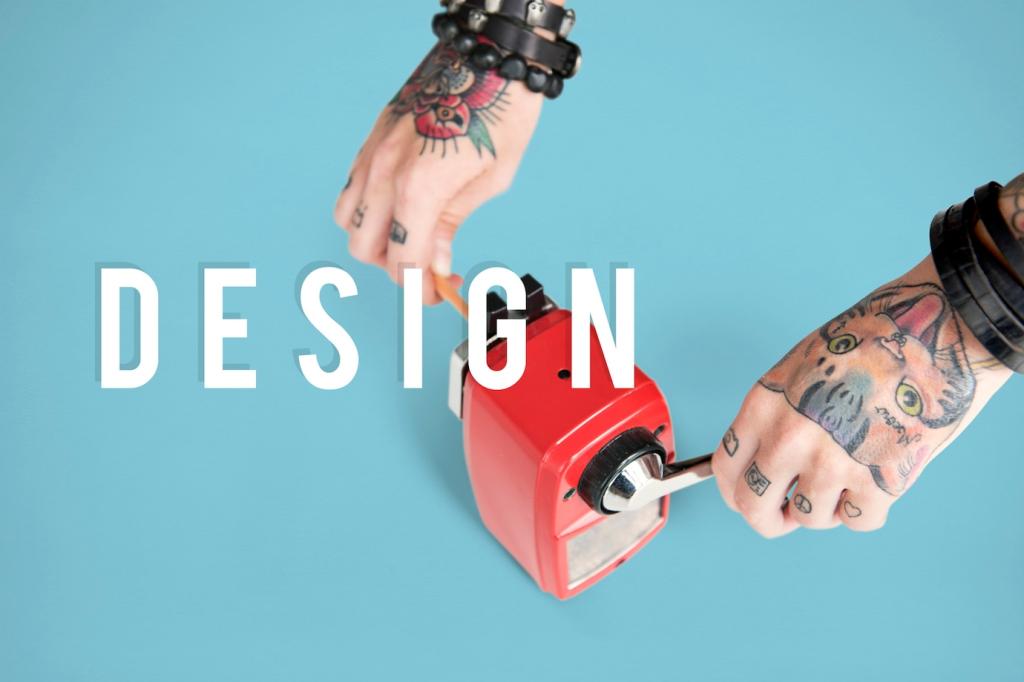

Emerging Minimalist Design Principles for Tomorrow

Clarity as a Competitive Advantage

Use Hick’s Law to trim choices, and structure flows around one decision per screen. When a fintech client removed optional filters, completion rates rose, and support tickets fell. Ask: what choice can responsibly disappear?

Clarity as a Competitive Advantage

Whitespace is not emptiness; it is strategy. Define responsive spacing with an 8-point grid and a modular scale so space communicates hierarchy. Readers breathe easier, comprehension improves, and the product feels immediately trustworthy.

This is the heading

Lorem ipsum dolor sit amet, consectetur adipiscing elit. Ut elit tellus, luctus nec ullamcorper mattis, pulvinar dapibus leo.


This is the heading

Lorem ipsum dolor sit amet, consectetur adipiscing elit. Ut elit tellus, luctus nec ullamcorper mattis, pulvinar dapibus leo.

Name tokens by purpose, not pixels: action-background, emphasis-text, surface-elevated. Centralize them so theming becomes subtraction, not duplication. With a single source of truth, teams align faster and variations remain effortlessly consistent.

Systems That Scale Simply

Use variable fonts to consolidate multiple weights into one file, reducing requests and complexity. Define optical sizes and responsive ramps. The result is leaner performance, smoother rhythm, and stronger typographic cohesion across breakpoints.

Systems That Scale Simply

Interaction Minimalism

Meaningful Microinteractions

Start with intent: confirm, inform, or delight—choose one. Use short, consistent easing and purposeful feedback. Minimalism favors confirmation that feels inevitable, not theatrical. Measure with time-on-task and satisfaction, not just novelty-driven reactions.

Gesture Grammar and Discoverability

Hidden gestures feel clever until they fail. Pair gestures with lightweight hints, and ensure redundancy via visible affordances. Tomorrow’s minimalist design respects first-use learning while allowing expert flow acceleration without confusing newcomers.

Motion With Purpose

Use motion to clarify causality, not distract. Keep durations around 150–200ms, honor reduced-motion preferences, and animate properties that support comprehension. When motion explains hierarchy, the interface becomes quieter while meaning grows louder.
Empty states set expectations and teach by doing. Offer one clear step, a realistic example, and a safe undo. Tomorrow’s minimalist design treats emptiness as guidance, not a dead end or decorative silence.
Expose essentials first, hide complexity behind clear labels, and maintain continuity through breadcrumbs or chips. Every reveal must answer a user’s plausible next question. If it doesn’t, it belongs later—or nowhere at all.
Write at an eighth-grade reading level without condescension. Prefer verbs over adjectives, outcomes over features. Strong microcopy aligns the team’s thinking, reduces support, and keeps experiences human. Share a before-and-after line you’re proud of.

Accessibility Is Minimalism

Use visible outlines, logical order, and a clear focus transition. Strive for at least 3:1 contrast on focused elements. Tomorrow’s minimalist design celebrates robust keyboard navigation as a hallmark of true visual restraint.

Accessibility Is Minimalism

Keep line lengths around 45–75 characters, allow user-controlled scaling, and respect system settings. Generous line height and steady rhythm improve comprehension. Minimal typography is not sparse; it is hospitable to varied readers.
Jazzyjunctionus
Privacy Overview

This website uses cookies so that we can provide you with the best user experience possible. Cookie information is stored in your browser and performs functions such as recognising you when you return to our website and helping our team to understand which sections of the website you find most interesting and useful.